

Last updated: July 2026
If you want a career in medicine but the idea of a decade of medical school and residency doesn’t appeal to you, physician assistant work is worth a serious look. PAs examine patients, diagnose conditions, prescribe medication, and in many states can do almost everything a doctor does — but they get there in a fraction of the time and cost. It’s one of the most consistently well-paid, in-demand careers in American healthcare, and 2026 is shaping up to be another strong year for the profession.
Here’s an honest, detailed breakdown of what the job actually involves, what it pays, and how to get hired.
What Does a Physician Assistant Actually Do?
A physician assistant, often written as PA or, once certified, PA-C, is a licensed medical provider who works alongside physicians — though in practice, many PAs operate with a great deal of independence, especially in rural or underserved areas where doctors are in short supply.
Typical day-to-day responsibilities include:
- Taking patient histories and performing physical exams
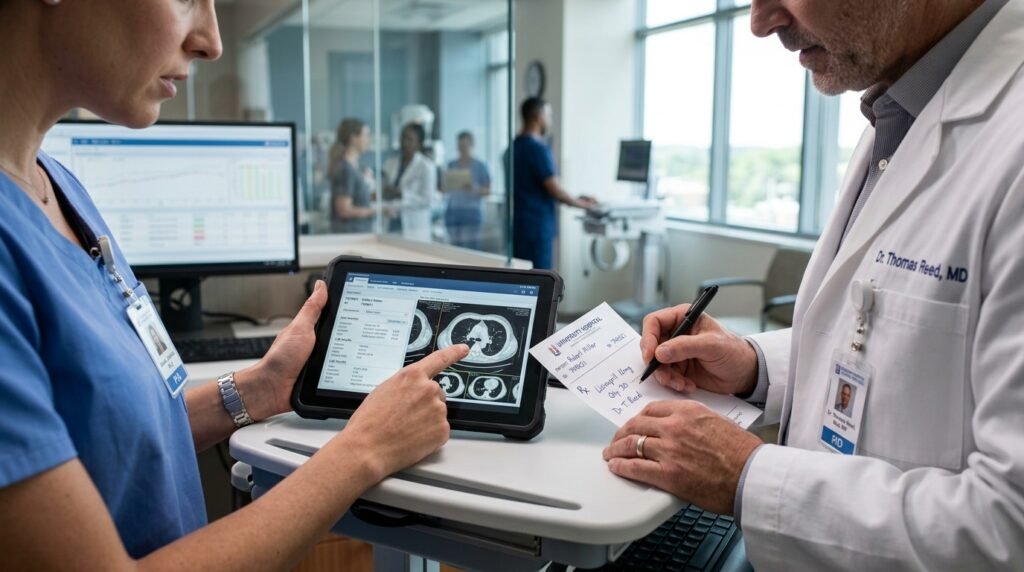
- Ordering and interpreting lab tests, X-rays, and other diagnostics
- Diagnosing illnesses and developing treatment plans
- Prescribing medication (PAs have prescribing authority in all 50 states)
- Assisting in surgery
- Educating patients on managing chronic conditions
- Coordinating care with physicians, nurses, and specialists
PAs work across nearly every area of medicine — primary care, emergency medicine, orthopedics, dermatology, cardiology, surgery, and psychiatry among them. Unlike doctors, who typically train and certify within a single specialty, PAs are trained as generalists and can move between specialties throughout their careers without going back for additional years of schooling, which is one of the more attractive features of the job for people who want flexibility.
What You Need to Become a Physician Assistant
Becoming a PA is faster than becoming a doctor, but it’s still a serious commitment. The general path looks like this:
- Complete a bachelor’s degree, usually in a science-related field, along with prerequisite coursework in biology, chemistry, anatomy, and statistics.
- Gain hands-on healthcare experience — most PA programs expect applicants to have logged real patient-care hours beforehand, often as an EMT, medical assistant, nurse, or similar role. This is one of the more underappreciated hurdles: competitive programs frequently expect well over 1,000 hours of direct patient care experience before you even apply.
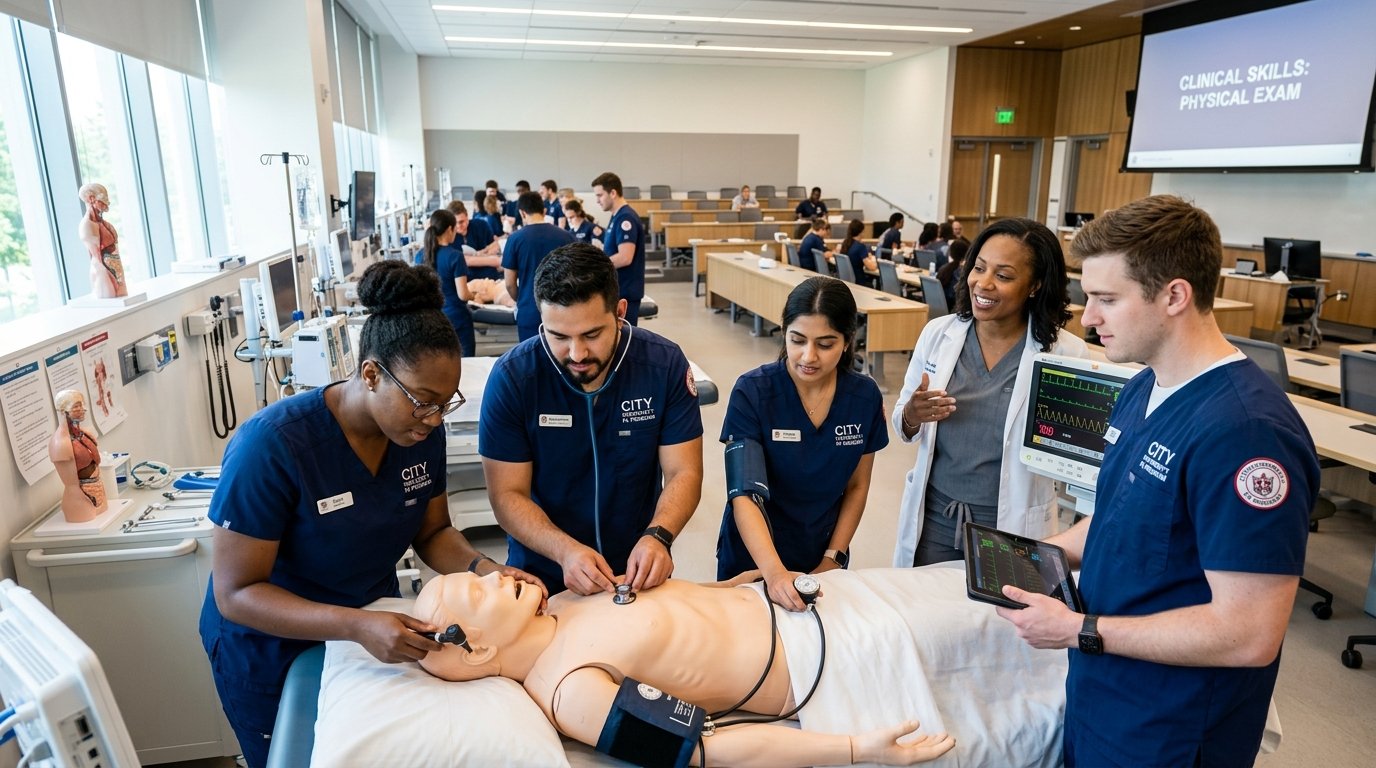
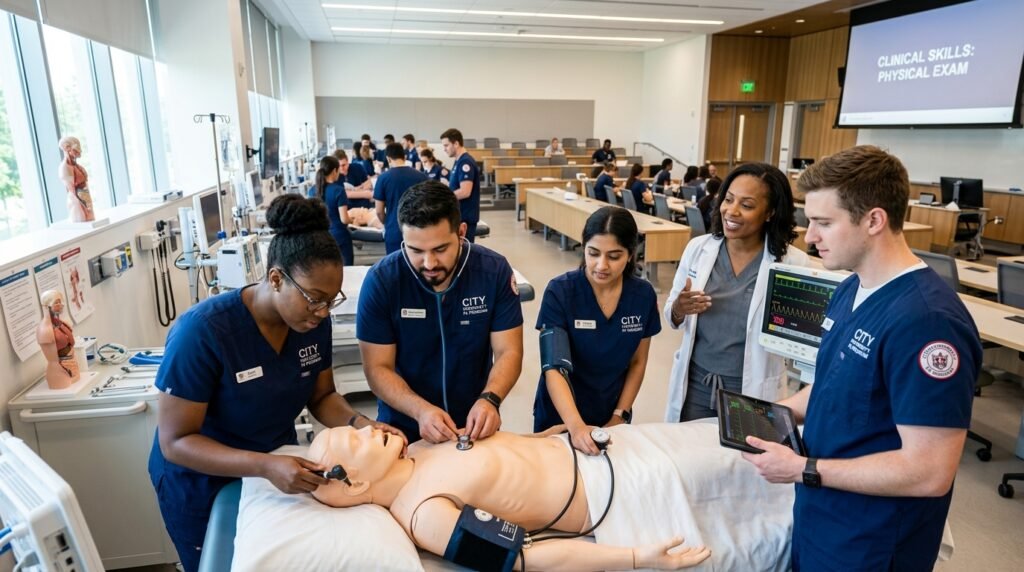
- Complete an accredited PA program, which is typically a master’s-level program lasting about 27 months (a little over two years) and includes both classroom instruction and clinical rotations across specialties like family medicine, surgery, emergency medicine, and pediatrics.
- Pass the PANCE (Physician Assistant National Certifying Examination), administered by the National Commission on Certification of Physician Assistants (NCCPA). Passing this exam is what earns you the “PA-C” credential.
- Get licensed in your state, since PAs are licensed at the state level, not nationally, and requirements can vary slightly from state to state.
- Maintain certification through continuing medical education and periodic recertification exams required by the NCCPA.
All told, most people become a working PA in about six years from the start of their bachelor’s degree — roughly four years of undergraduate study plus a bit over two years of PA school. That’s substantially faster than the decade or more it typically takes to become a physician.
PA programs are also considerably less expensive than medical school, with total program costs commonly falling somewhere between $70,000 and $90,000 depending on the school and your residency status, compared to medical school costs that often run several times higher.
How Much Do Physician Assistants Make?
PA salaries are genuinely strong, and this is consistently one of the more reliable figures across sources compared to some other healthcare careers.
According to the U.S. Bureau of Labor Statistics, the national median salary for physician assistants was approximately $135,880 as of the most recent reporting period, with the bottom 10% earning under roughly $95,000 and the top 10% earning above $190,000. Industry surveys from the American Academy of Physician Associates (AAPA) show a similar picture, with median total compensation landing around $140,000 and continuing to trend upward year over year.
A few things that move the number significantly:
- Specialty matters a lot. Surgical specialties tend to pay the most — cardiovascular and cardiothoracic surgery PAs often see total compensation approaching $170,000, and dermatology PAs aren’t far behind, with top earners in that specialty reaching well into six figures beyond the median. Primary care and family medicine, while extremely important and in high demand, tend to sit toward the lower end of the PA pay range.
- Location matters too, in two different ways. In raw dollar terms, states like New Jersey, California, Washington, Hawaii, and New York report the highest median PA salaries. But once you adjust for the actual cost of living in each state, the picture shifts — states like Oklahoma, Vermont, and Iowa often offer better real buying power for your salary than the highest-paying states on paper.
- Bonuses and benefits are common. More than half of full-time PAs report receiving an annual bonus, and the vast majority also receive employer-paid professional development support covering things like continuing education costs, licensing fees, and professional dues.
- Experience and setting count. Outpatient care centers, employment services firms, and certain research-focused institutions tend to report some of the highest average PA salaries among employer types.
For comparison, PAs generally earn somewhat less than physicians (who commonly earn $250,000 to $400,000+ depending on specialty) but comparable to or slightly above nurse practitioners, while working a more standard 40-hour week — most full-time PAs report significantly more predictable hours than physicians, many of whom regularly work 60 hours or more per week.
Job Outlook: Is This Still a Smart Career Choice?
Yes, and by a wide margin. The Bureau of Labor Statistics projects PA employment to grow around 20% to 27% over the next decade depending on the specific projection window used, which is dramatically faster than the average across all occupations. That growth translates into roughly 12,000 new PA job openings every year when you combine newly created positions with the need to replace PAs who retire or leave the field.
The reasons behind this demand are structural, not temporary:
- The US population is aging and needs more medical care
- Chronic conditions like diabetes and heart disease continue to rise
- There’s a persistent shortage of physicians, particularly in rural and underserved areas
- Health systems increasingly rely on PAs to expand access to care cost-effectively compared to hiring additional physicians
- Many states have expanded PAs’ scope of practice in recent years, allowing them to take on more responsibility and further increasing employer demand
Rural and medically underserved areas in particular tend to offer some of the strongest opportunities, often paired with signing bonuses or student loan repayment assistance as an incentive to attract PAs to those communities.
How to Find and Apply for Physician Assistant Jobs
- AAPA Career Central — the official job board run by the American Academy of Physician Associates, specifically for PA roles.
- Hospital and health system career pages — most major hospital networks post PA openings directly, often with detail on specialty department and shift structure that general job boards don’t include.
- Indeed and LinkedIn — useful for casting a wide net and filtering by specialty and location.
- USAJobs.gov — for PA roles with the Veterans Health Administration, military treatment facilities, and other federal health agencies, which often come with strong benefits and loan repayment programs.
- Locum tenens agencies — for PAs interested in short-term or travel assignments, agencies specializing in temporary medical staffing can offer high hourly rates and flexibility, particularly appealing for PAs early in their careers who want to sample different specialties and regions before settling down.
Tips for Standing Out as a Candidate
- Get real patient-care experience before applying to PA school. This is one of the most heavily weighted parts of a competitive PA school application — working as an EMT, CNA, medical assistant, or scribe before you apply demonstrates genuine commitment and gives you a real head start.
- Choose your clinical rotation sites strategically. Many PAs end up getting hired at or near a hospital where they completed a clinical rotation, since supervisors already know their work.
- Consider specializing early if a particular field appeals to you. While PAs can switch specialties without additional formal schooling, gaining early experience in a higher-paying specialty like surgery, emergency medicine, or dermatology can meaningfully shape your long-term earning potential.
- Look seriously at rural and underserved postings. These roles often come with signing bonuses, loan repayment assistance, and faster paths to more autonomous practice — a strong option if you’re open to relocating.
- Stay on top of your certification requirements. Because PAs must periodically recertify through the NCCPA, staying organized with continuing education credits avoids any gap in your ability to practice.
Frequently Asked Questions
How long does it take to become a physician assistant? Typically about six years total: roughly four years for a bachelor’s degree plus prerequisite coursework and patient-care experience, followed by a bit over two years in an accredited PA program.
Do physician assistants need to go to medical school? No. PAs attend separate, shorter graduate-level PA programs rather than medical school, and are certified through the PANCE exam rather than the medical licensing exams physicians take.
Can physician assistants prescribe medication? Yes, PAs have prescribing authority in all 50 states, though the specific scope can vary somewhat by state and by their supervising or collaborating physician arrangement.
Is being a PA less demanding than being a doctor? Generally, yes in terms of weekly hours — most full-time PAs work a standard 40-hour week, compared to physicians who frequently work 60 or more hours weekly, though this varies significantly by specialty and setting for both roles.
What’s the difference between a PA and a nurse practitioner? Both are advanced healthcare providers with similar earning potential overall, but they’re trained under different models — PAs are trained under a generalist medical model with a strong emphasis on rotating through multiple specialties, while nurse practitioners are trained under a nursing model, often with a chosen population focus (such as family, pediatric, or psychiatric care) from the start. Scope-of-practice rules and independence also vary by state for both roles.
Which PA specialties pay the most? Surgical specialties, particularly cardiovascular and cardiothoracic surgery, along with dermatology, tend to report the highest total compensation. Primary care and family medicine roles, while essential and in high demand, typically pay somewhat less than procedural specialties.
Sources
- U.S. Bureau of Labor Statistics – Occupational Outlook Handbook, Physician Assistants
- National Commission on Certification of Physician Assistants (NCCPA)
- American Academy of Physician Associates (AAPA)
- AAPA Career Central
- USAJobs.gov
Salary and job outlook figures vary by source, specialty, region, and experience level. Always verify current data with official sources before making career or education decisions.





Leave a Reply